Trying to retain a sense of balance in, and about, UK higher education has always been a bit of a challenge. The enormous good that is done in, and by, the sector has for the last thirty plus years I’ve been engaged with the sector (and no doubt before that as well) sat alongside much gloomier interpretations of the current and future state of higher education.
The sector’s current crises of funding, value and social licence can sometimes overwhelm our recognition of the economic, social and cultural benefit higher education brings to the country, communities and individuals. Nevertheless that benefit is both substantial and significant; and it continues to shape the UK in critically important, positive ways.
present and future realities
At the same time it can be difficult to maintain that sense of balance, and for good reason. The summer and autumn has brought what feels like a ceaseless tide of reports of institutional financial distress; cost-cutting programmes with further staff losses (£), on top of a brutal last two years; and, inevitably, significant industrial action in multiple universities.
The financial whirlpool is dragging down ever more universities, and the vortex is only increasing in strength. Changes to the government’s immigration policy and practice catch all but the fortunate few universities in a cycle of year-on-year significant reductions in the international fee income (£) through which the UK had sought to address chronic domestic underfunding of our chosen higher education model.
The sector is clearly heading towards a very different model of higher education: both in the number and nature of its universities, and in the character of the educational experience it offers students and the extent of research and innovation activity that will be possible.
Difficult choices are already being made by many individual universities, and more of such choices to follow; with the difficulty of those choices only increasing. Those choices affect and involve all those who study and work at our universities, and the communities in which those universities sit. However, the responsibility for these choices, and the power to make and influence them, is not distributed equally. Clearly governing bodies and executives have more agency and more power than other members of university communities.
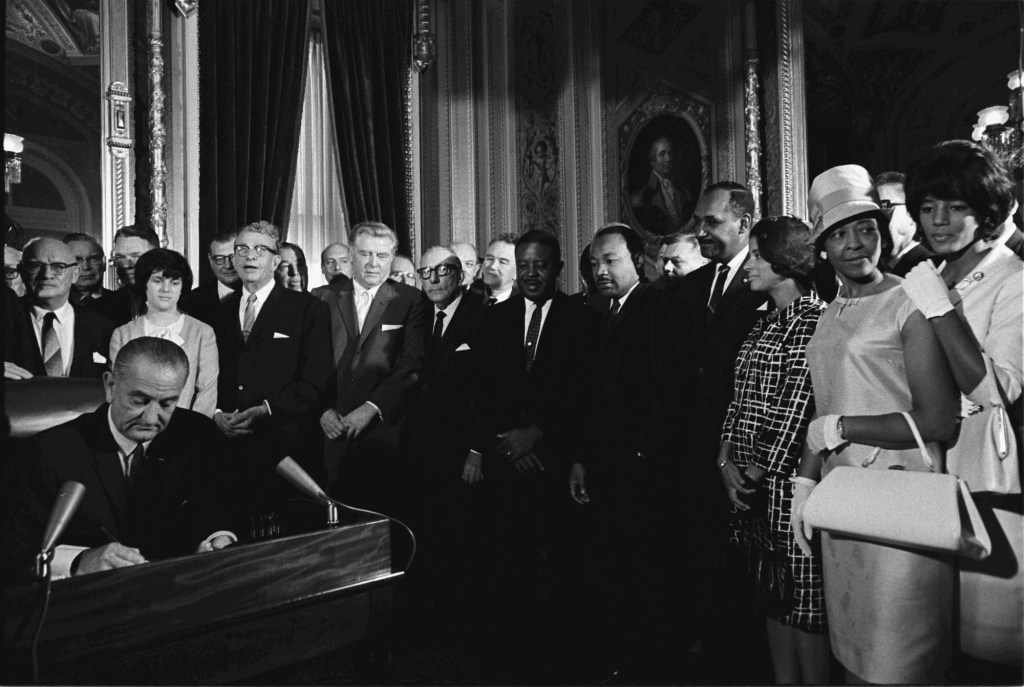
Which made me think of Lyndon Johnson.
the nature of power
Or perhaps less the former Democratic US President, and more of something his biographer Robert Caro wrote. Caro has spent over half a century using biography as a means to study power. How it is gained. How it is used. The ends to which it is put.
Caro started work in in the 1970s on a still unfinished multi-volume biography of Johnson that is so big that it can be seen from space (four volumes, 3,625 pages and counting). In the most recently published volume, Caro started with some reflections on power. What he wrote is both interesting and much-quoted, and I’m going to add to the list of those who have quoted the following observation:
although the cliché says that power always corrupts, what is seldom said, but what is equally true, is that power always reveals. When a man is climbing, trying to persuade others to give him power, concealment is necessary: to hide traits that might make others reluctant to give him power, to hide also what he wants to do with power … but as a man obtains more power, camouflage is less necessary. The curtain begins to rise. The revealing begins.
Robert Caro, The Years of Lyndon Johnson: The Passage of Power (London, 2012), p.xiv
While not all aspects of the quote are relevant to university executives and governing bodies collectively, which have power rather than ‘climb’ to achieve it, the fundamental point is. Power reveals true character.
revealed truths
As the challenges facing universities continue to intensify, the decisions that need to be made will only get more and more difficult. And there are never easy, painless answers to difficult questions.
In the current crisis of UK higher education no individual, group or body has unlimited power. But though not untrammelled, significant power (and responsibility) resides in the governing bodies and executives of universities. And power reveals true character, in this context the true collective character of governing and executive bodies.
Character is different, deeper than culture and values. As I’ve referred to before, work on virtue ethics in organisational contexts has set out what constitutes good character for an organisation: courage; temperance; justice; practical wisdom; zeal; integrity; and constancy.
As individual universities face the challenges of the current times, governing bodies and executives will need to take the difficult decisions, with painful consequences, demanded by these times. At this point that feels unavoidable in the sector.
What will be interesting will be to see what the decisions taken are, how they are taken and how they are implemented by executives and governing bodies. In other words how they exercise their power, and what this demonstrates about the true collective character of those groups within universities with the most power.







Leave a Reply