
In the week or two running up to Christmas, I noticed there were a handful of posts on LinkedIn noting and the appointment over the last year of a number of women as vice-chancellors of UK universities. And it was good, and helpful, to see these appointments brought together and celebrated.
There is, though, clearly a distance to go in this area.
The most recent AdvanceHE EDI statistics report (based on the HESA data for 2022-23) showed that at Head of Institution level, the female:male breakdown was 33%:67% [p.220] – in contrast to a female:male breakdown of 55%:45% for all staff in UK higher education.
in the room
There are any number of reasons why this is important. One was emphasised for me earlier in 2024 in a non-HE context, when as part of the Covid pandemic inquiry the former Deputy Cabinet Secretary highlighted that the overwhelming majority of key decision makers in the critical phases of the pandemic were male, and that ‘the “exclusion of female perspective” led to “significant negative consequences”’.
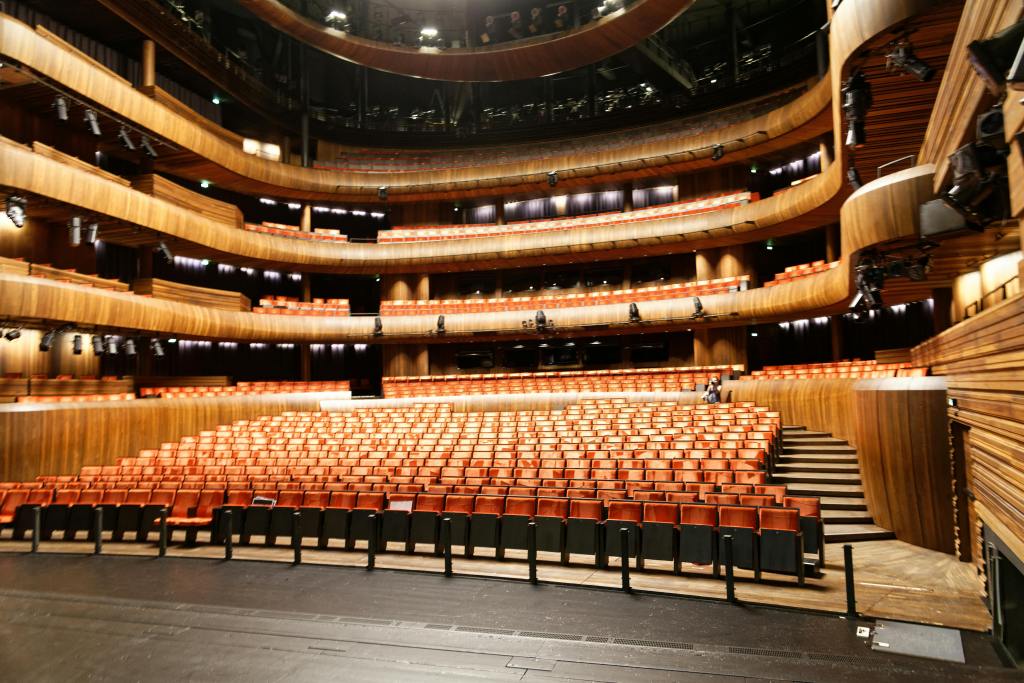
It matters who is in the room when difficult decisions are taken.
Of course there are ethical and values dimensions to this. But it’s also a matter of self-interest; for their own good, when important decisions are made organisations need to ensure there is diversity in those present in the room as otherwise the chances of poor decision-making rises.
And that set me thinking a little.
governance, leadership and management
Although the current challenges in higher education are of a much lower order than a global pandemic, the difficulties facing UK universities are still of a scale, complexity and seriousness not seen in the sector for a generation. In that context, very difficult decisions (£) need to be made.
In recent months this has led to a lot of talk about the crucial role and responsibilities of university governors in respect of such decisions.
But while university governors have a crucial role in the decisions that need to be made to meet the present challenges, many of the most important decisions sit with executive leadership teams in universities. So who is in the room in universities when executive teams need to make these decisions?
a starting point
There’s some value in looking at this at the level of individual universities. However, that value is a little limited by the small sample given the size of an individual university’s executive, together with the specificities and contingencies that might be in play in appointments having a disproportionate effect given the small size of executive teams.
Instead this is something where perhaps it’s more useful to look at things at a sector level.
The HESA data is helpful with this, as it gives female:male breakdowns by ‘contract level’ with a fair amount of granularity at the most senior levels:
- Level 1: Head of Institution
- Level 2: Deputy/Pro-Vice-Chancellor/Chief Operating Officer/Registrar/University Secretary
- Level 3a: Head/Director of major academic area
- Level 3b: Director of major function e.g. finance, HR, corporate services
- Level 3/4: Head of school/division/department (the Level split by size)
But universities are tricky things: they all look the same, but as soon as the surface is scratched they all tend to be very different. And this also (particularly?) applies to how they set up their executive teams; i.e. which roles are on the executive and which aren’t, and therefore who is in the room when the crucial executive/management decisions are taken.
the next step
To try and understand this a bit better, I decided to do a little bit of digging around university websites looking at the roles that are publicly listed as being on the executive team; and who holds these roles.
That’s potentially a lot of work, so rather than look at all UK universities I focused in on a sample.
The subset I used was a cluster of 39 universities identified in an article by Vikki Bolivier in 2015. Having looked across a range of data (on research; teaching quality; economic resources; academic selectivity; student socio-economic mix), these 39 universities were in the second cluster identified by Bolivier (the first cluster contained just two universities: Cambridge and Oxford) and contains only pre-92 universities but not all pre-92s.
All 39 of these universities are different in important respects; but also similar on the basis of the characteristics considered by Bolivier. Taking that as my starting point, institutional websites yielded up a dataset (if that’s not too grand a word) of 483 executive-level roles, to look at the female:male breakdown of executive teams.
the big picture
Within this group 42% (205) of executive members were female, and 58% (278) were male. Noticeably different to the 55%:45% female:male ratio for all staff in universities, but by coincidence identical to the ratio for higher education governors as set out in the AdvanceHE report on the EDI characteristics of higher education governors [p.10].
The split between academic and professional services executive roles was 69% (331) to 31% (152) respectively. And the overlap between the academic:professional services split, and the female:male breakdown, is interesting.
For executive-level academic roles, the breakdown is 39% (128) female and 61% (203) male. In contrast 51% (77) of professional services executive posts are held by women, and 49% (75) by men.
So going back to the question of who’s in the room, it’s clear that overall while the female:male balance in the executive teams of these universities isn’t as bad as it was in senior government circles during pandemic (not that that’s the highest of hurdles). There is though an imbalance in university executive teams, and it’s possible to see different facets of this imbalance by digging a little deeper into the data.
level and type
The data can be sliced by type of post, for the academic executive-level posts. At head of institution level, for example, 28% (11) are female and 72% (28) are male.
And it’s interesting to distinguish between the executive-level academic posts with cross-cutting/thematic responsibilities, and those who are heads of academic faculties (or equivalent). Of the academic heads of faculty 37% (50) are female, and 63% (85) are male. The gap is noticeably smaller for academic executive members with cross-cutting portfolios – 43% (67) are female, and 57% (90) are male.
who is responsible for what
A further way of looking at the data is through the portfolios for which academic executive members are responsible.
For cross-cutting academic executive roles, there’s very significant variation between universities in how portfolios are carved up (this variation is perhaps even greater for executive-level professional services roles). Every university, though, has an executive-level academic leadership role with a primary focus on education (and some more than one); and one responsible for research.
Of postholders of the education-focused executive roles, 59% (24) are female and 41% (17) are male; and for research the distribution is 33% (13) female, and 67% (26) male. Striking differences, that across the two portfolios are almost mirror images of each other.
It’s also possible to break down the academic head of faculty roles by discipline area, as while universities name and constitute their faculties differently it is possible to allocate all of these roles into one of two broad groupings – STEM and SHAPE.
And again that leads to some interesting comparisons. Of the executive-level heads of faculty in SHAPE disciplines, 55% (33) are female and 45% (27) are male. For STEM the figures are 24% (17) female, and 76% (55) male.
decision-making
All of the above is a snapshot of a sample, using valid but limited evidence.
But even with such caveats, it’s still an interesting indication of who is in the room when university executive teams are contemplating the difficult decisions their organisations now face. And raises the interesting question of what this ay mean if we accept the idea that for their own good, organisations need to ensure sufficient diversity in the rooms where key decisions are made.






 left to my own devices - occasional thoughts on higher education
Leave a comment